


 Liberal
François-Philippe Champagne
Rank #12Minister of Finance and National Revenue and MP for Saint-Maurice—Champlain. International corporate attorney, former senior vice president at Swiss engineering giant ABB Group, former Minister of Innovation, Science and Industry, and architect of Canada's major international industrial agreements.
~C$4.5M Conflict of Interest and Ethics Commissioner
Cabinet Ministerial salary (C$203k MP + C$96k Minister)
1.5 decades of ministerial pay
14× median Canadian household
Where François-Philippe Champagne Stands: Core Political Positions
Key legislative priorities and core political philosophy across major policy domains:
- • Multi-Billion Auto Deals: Secured transformative multi-billion dollar contracts bringing Volkswagen (St. Thomas), Stellantis-LG (Windsor), and Northvolt battery gigafactories to Canada.
- • Matching US IRA Subsidies: Structured performance-based production incentives to defend the Canadian automotive assembly corridor from being hollowed out by US state subsidies.
Secured Canada's manufacturing survival into the next century, protecting hundreds of thousands of unionized auto jobs.
Massive government production subsidies were criticized for committing tens of billions of public dollars to foreign multinationals.
- • Mandatory Wireless Price Reductions: Conditioned the Rogers-Shaw merger approval on enforceable commitments, including Quebecor's expansion of Freedom Mobile to create a viable fourth national competitor.
- • Telecommunications Act Reforms: Directed the CRTC to enforce wholesale mobile virtual network operator (MVNO) access and reduce roaming fees.
Delivered measurable 20%+ drops in average Canadian cellular data prices according to Statistics Canada CPI data.
Consumer advocates argued blocking the mega-merger outright would have been far better for long-term market competition.
- • 5G Huawei Ban: Formally banned Huawei and ZTE equipment from Canada's 5G mobile networks on national security and five-eyes intelligence grounds.
- • Investment Canada Act Tightening: Overhauled foreign takeover reviews, blocking Chinese state-owned enterprises from acquiring Canadian critical mineral mining firms.
Guarantees that vital national digital networks and critical lithium/uranium deposits cannot be acquired by hostile authoritarian states.
Tighter foreign takeover rules restrict junior mining exploration firms from accessing global risk capital.
- • C$2.4B Sovereign AI Compute Fund: Launched a C$2.4B federal package to build sovereign Canadian AI computing clusters and provide subsidized compute power for homegrown AI researchers.
- • Artificial Intelligence and Data Act (AIDA): Authored federal legislation regulating high-impact artificial intelligence systems to prevent algorithmic discrimination and bias.
Keeps Canada's world-leading AI pioneers (Mila, Vector Institute) from fleeing to Silicon Valley tech giants.
Early regulatory guardrails sparked concerns from Canadian tech startups about excessive bureaucratic compliance.
Disclosed Asset Portfolio Breakdown
High-level asset allocation compiled from official public financial disclosure filings (Conflict of Interest and Ethics Commissioner):
ABB Group & AMEC Executive Equity
Primary private fortune earned as Vice President and Senior Legal Counsel at ABB Group in Zurich, Switzerland, and Strategic Development Director at AMEC engineering in London.
Shawinigan & European Properties
Waterfront residential estate in Shawinigan, Quebec, alongside European property assets acquired during his international corporate career.
Diversified Corporate Equities
Passive investment holdings managed in full compliance with the federal Conflict of Interest Act through independent qualified trustees.
Federal Parliamentary Pension
Accrued defined benefit pension annuity earned over 11 years in Parliament, including service across four senior Cabinet ministries.
The Conflict of Interest Act & Ministerial Blind Trusts
How does Canadian federal law govern the wealth of ministers and members of Parliament? All disclosures are audited under the stringent provisions of the Conflict of Interest Act (2006).
The Statutory Distinction
Under the federal Act, public office holders may retain 'exempt assets' (residential properties, cash deposits, Canadian savings bonds), but must completely divest or place 'controlled assets' (publicly traded corporate equities, commodities) into a qualified blind trust.
Third-Party Trustee Firewall
Cabinet ministers must hand total management of corporate stocks to an arm's-length independent trustee. Ministers are legally prohibited from communicating with the trustee or giving any instructions regarding investment decisions.
Preventing the Revolving Door
Former Cabinet ministers are legally subject to a strict two-year cooling-off period after stepping down, during which they are forbidden from lobbying any federal department or accepting commercial contracts with entities they directly regulated in office.
Can Canadian Politicians Pocket Campaign Donations? Understanding Elections Canada Law
A frequent misconception is that elected Canadian leaders profit from campaign warchests. The Canada Elections Act strictly separates party donations from personal finances.
~C$4.5M Disclosed Personal Wealth
Generated through prior corporate law practices, clean tech leadership, business founding, or book royalties. Fully subject to Canada Revenue Agency (CRA) personal taxation.
Strictly Audited Riding Association Accounts
Political donations raised into registered electoral district associations to fund campaign lawn signs, voter contact software, and local campaign offices.
The Riding Dilemma: Representing the Mauricie Valley (Shawinigan)
Saint-Maurice—Champlain spans the historic Mauricie river valley, famously represented by former Prime Minister Jean Chrétien, centered on forestry, hydro power, and aluminum.
Home to the birthplace of Quebec's hydroelectric industrialization (Shawinigan Water & Power), now pivoting to hydrogen and clean tech innovation.
Surrounding rural municipalities (La Tuque, Saint-Tite) depend on forestry, pulp and paper, and outdoor tourism, confronting timber supply challenges.
Key Milestones: François-Philippe Champagne's Political Career
Chronological milestones across public office and private enterprise:
Corporate Counsel at AMEC plc
Built an international legal practice in London as senior corporate counsel for multinational engineering and project management firm AMEC.
Vice President at ABB Group
Appointed Vice President and Senior Legal Counsel at Swiss engineering conglomerate ABB in Zurich, leading multi-billion dollar infrastructure acquisitions across 100 countries.
Young Global Leader Recognition
Named a Young Global Leader by the World Economic Forum, expanding international relationships across European and Asian business networks.
Elected MP for Saint-Maurice—Champlain
Returned home to Quebec to run for Parliament, winning the seat once held by Jean Chrétien and entering federal service.
Minister of International Trade
Appointed to Cabinet as Minister of International Trade, concluding the CPTPP Pacific trade agreement following US withdrawal.
Appointed Foreign Affairs Minister
Assumed leadership of Global Affairs Canada, managing the complex diplomatic crisis surrounding the detention of Michael Kovrig and Michael Spavor in China.
Appointed Innovation & Industry Minister
Assumed leadership of the Department of Innovation, Science and Industry, earning the moniker 'the energizer bunny' for securing global gigafactories.
Appointed Minister of Finance and National Revenue
Appointed Minister of Finance and National Revenue by Prime Minister Mark Carney, taking stewardship of federal fiscal policy and tax modernization.
How Does François-Philippe Champagne Compare to Other Wealthy Leaders?
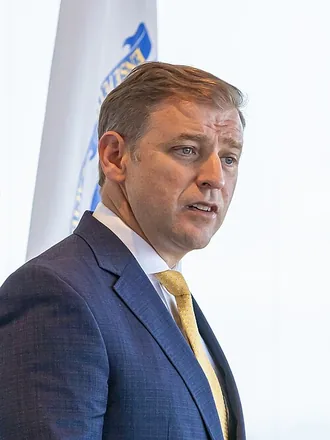
François-Philippe Champagne sits at rank #12 in the Canadian Parliament, directly flanked by closest wealth peers across the legislature. View full Canada leaderboard
| Rank | Lawmaker | Disclosed Net Worth |
|---|---|---|
| #10 |

Conservative
|
C$4,800,000
CAD
|
| #11 |
Liberal
|
C$4,500,000
CAD
|
| #12 |
François-Philippe Champagne (Saint-Maurice—Champlain (Quebec))
Liberal
|
C$4,500,000
CAD
|
| #13 |
C$4,000,000
CAD
|
|
| #14 |
C$4,000,000
CAD
|


Can you deduce today's mystery lawmaker?
Every day, Worthle features a new mystery politician. Unlock clues about their salary, investments, and disclosed net worth to guess their identity and discover how public leaders build wealth.
Frequently Asked Questions: François-Philippe Champagne's Net Worth
What is François-Philippe Champagne's net worth in 2026?
François-Philippe Champagne has an estimated net worth of C$4,500,000 (~C$4.5 Million) compiled from public ethics filings, international corporate legal earnings, and residential real estate assets.
How did François-Philippe Champagne acquire his fortune?
Before entering politics in 2015, he spent over 15 years as a high-earning corporate executive and senior legal director in Europe, notably at Swiss engineering powerhouse ABB Group in Zurich and AMEC in London, complemented by property holdings.
What is François-Philippe Champagne's salary as an Industry Minister?
As Minister of Innovation, Science and Industry, he receives a statutory combined salary of C$299,900 per year (C$203,100 base MP salary plus C$96,800 ministerial entitlement).
How does François-Philippe Champagne's wealth compare to the average Canadian family?
His net worth of C$4.5M is approximately 14 times higher than the median Canadian household net worth (C$329,900) and represents nearly 15 years of federal ministerial salary.
Explore More Canada Lawmaker Wealth Dossiers
View All →
Explore the Full Legislative Wealth Rankings
Discover how other prominent leaders compare across the national proximity index.