


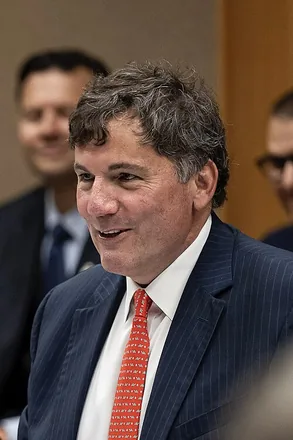
 Liberal
Dominic LeBlanc
Rank #15President of the King's Privy Council for Canada, Minister responsible for Canada-U.S. Trade, Intergovernmental Affairs, Internal Trade and One Canadian Economy, and MP for Beauséjour. Harvard Law educated barrister, senior Cabinet broker, and longest-serving continuous member of the federal Liberal caucus.
~C$3.8M Conflict of Interest and Ethics Commissioner
Cabinet Ministerial salary (C$203k MP + C$96k Minister)
1.3 decades of ministerial pay
11.5× median Canadian household
Where Dominic LeBlanc Stands: Core Political Positions
Key legislative priorities and core political philosophy across major policy domains:
- • Foreign Interference Legislation: Passed sweeping legislation creating a Foreign Influence Transparency Registry and modernizing the CSIS Act to combat foreign sabotage and espionage.
- • RCMP Modernization & Border Policing: Oversees the Royal Canadian Mounted Police (RCMP) and Canada Border Services Agency (CBSA), increasing resources against transnational narcotics and firearm trafficking.
Hardened democratic institutions against hostile foreign influence while strengthening border security.
Civil liberties organizations raised concerns regarding expanded intelligence sharing and surveillance definitions.
- • C$198B Healthcare Transfer Agreements: As Intergovernmental Affairs Minister, successfully brokered bilateral funding pacts with all 13 provincial and territorial premiers for the 10-year C$198B health plan.
- • Atlantic Accord & Regional Energy: Negotiated clean energy agreements with Atlantic Canadian premiers, modernizing the Atlantic Loop electrical transmission grid.
The federal government's most effective and respected negotiator with adversarial provincial premiers.
Healthcare transfer conditions were criticized by some premiers as encroaching on provincial constitutional jurisdiction.
- • Bill C-21 Handgun Freeze: Steered Bill C-21 into law, implementing a national freeze on the sale and transfer of handguns, and expanding red flag confiscation orders.
- • Anti-Smuggling Border Enforcement: Secured dedicated intelligence funding to intercept illegal firearms smuggled across the US border into Canadian cities.
Delivered historic gun control protections sought by victims' groups to curb urban gang violence.
Rural hunting and sport shooting communities condemned the restrictions as unfairly targeting lawful gun owners.
- • Owner-Operator Fleet Protections: As former Fisheries Minister, legally enshrined owner-operator rules to protect independent Atlantic inshore lobster fishermen from corporate takeover.
- • Marine Conservation Targets: Expanded Canadian marine protected areas from under 1% to over 14%, balancing commercial quotas with ocean biodiversity.
Fierce defender of independent coastal fishing communities and Atlantic Canadian maritime culture.
Conservation closures and right whale fishing gear restrictions caused seasonal friction with commercial fishers.
Disclosed Asset Portfolio Breakdown
High-level asset allocation compiled from official public financial disclosure filings (Conflict of Interest and Ethics Commissioner):
Grand-Barachois Coastal Estate
Substantial private coastal estate and residential acreage in Grand-Barachois along the Northumberland Strait, New Brunswick, alongside Ottawa residential property.
Clark Drummie Corporate Law Capital
Historical retained earnings from his career as an elite corporate barrister and commercial litigator with prominent New Brunswick law firm Clark Drummie.
Quarter-Century Defined Benefit Pension
One of the largest accrued defined benefit parliamentary pensions in Parliament, earned over 26 years of continuous service, including over a decade in senior Cabinet roles.
Diversified Corporate Equities
Passive investment portfolio held in qualified blind trusts under the federal Conflict of Interest Act, comprising Canadian equities and sovereign bonds.
The Conflict of Interest Act & Ministerial Blind Trusts
How does Canadian federal law govern the wealth of ministers and members of Parliament? All disclosures are audited under the stringent provisions of the Conflict of Interest Act (2006).
The Statutory Distinction
Under the federal Act, public office holders may retain 'exempt assets' (residential properties, cash deposits, Canadian savings bonds), but must completely divest or place 'controlled assets' (publicly traded corporate equities, commodities) into a qualified blind trust.
Third-Party Trustee Firewall
Cabinet ministers must hand total management of corporate stocks to an arm's-length independent trustee. Ministers are legally prohibited from communicating with the trustee or giving any instructions regarding investment decisions.
Preventing the Revolving Door
Former Cabinet ministers are legally subject to a strict two-year cooling-off period after stepping down, during which they are forbidden from lobbying any federal department or accepting commercial contracts with entities they directly regulated in office.
Can Canadian Politicians Pocket Campaign Donations? Understanding Elections Canada Law
A frequent misconception is that elected Canadian leaders profit from campaign warchests. The Canada Elections Act strictly separates party donations from personal finances.
~C$3.8M Disclosed Personal Wealth
Generated through prior corporate law practices, clean tech leadership, business founding, or book royalties. Fully subject to Canada Revenue Agency (CRA) personal taxation.
Strictly Audited Riding Association Accounts
Political donations raised into registered electoral district associations to fund campaign lawn signs, voter contact software, and local campaign offices.
The Riding Dilemma: Representing Southeastern New Brunswick (Beauséjour)
Beauséjour encompasses the Acadian coastal heartland of southeastern New Brunswick, combining commercial lobster fisheries with university and aerospace towns.
Shediac (the Lobster Capital of the World) and coastal harbours drive hundreds of millions in seafood exports and vibrant summer beach tourism.
Communities like Sackville (Mount Allison University) and Dieppe suburban commuters confront rural healthcare staffing deficits and transport links.
Key Milestones: Dominic LeBlanc's Political Career
Chronological milestones across public office and private enterprise:
Called to the New Brunswick Bar
Graduated from Harvard Law School and built a distinguished litigation career with Clark Drummie in Moncton, specializing in commercial litigation and administrative law.
Elected MP for Beauséjour
Won election to the House of Commons, capturing the seat once represented by his father, former Governor General Roméo LeBlanc, and entering federal politics.
Contested Liberal Party Leadership
Launched a bid for the federal Liberal leadership, eventually stepping aside to support Michael Ignatieff and serving as Chief Opposition Whip.
Leader of the Government in the Commons
Appointed Government House Leader by longtime personal friend Justin Trudeau, steering early legislative agendas through Parliament.
Minister of Fisheries and Oceans
Appointed Minister of Fisheries, Oceans and the Canadian Coast Guard, enshrine owner-operator protections for inshore fishermen into federal law.
Minister of Intergovernmental Affairs
Took responsibility for federal-provincial diplomacy, navigating high-stakes negotiations with provincial premiers through the COVID-19 pandemic.
Minister of Public Safety
Appointed to lead Public Safety, Democratic Institutions and Intergovernmental Affairs, managing national security, the RCMP, and foreign interference inquiries.
Appointed Privy Council President & Canada-U.S. Trade Minister
Appointed President of the King's Privy Council for Canada and Minister responsible for Canada-U.S. Trade under Prime Minister Mark Carney.
How Does Dominic LeBlanc Compare to Other Wealthy Leaders?
Dominic LeBlanc sits at rank #15 in the Canadian Parliament, directly flanked by closest wealth peers across the legislature. View full Canada leaderboard
| Rank | Lawmaker | Disclosed Net Worth |
|---|---|---|
| #13 |
C$4,000,000
CAD
|
|
| #14 |
C$4,000,000
CAD
|
|
| #15 |
Dominic LeBlanc (Beauséjour (New Brunswick))
Liberal
|
C$3,800,000
CAD
|
| #16 |

Conservative
|
C$3,500,000
CAD
|
| #17 |

Conservative
|
C$3,500,000
CAD
|


Can you deduce today's mystery lawmaker?
Every day, Worthle features a new mystery politician. Unlock clues about their salary, investments, and disclosed net worth to guess their identity and discover how public leaders build wealth.
Frequently Asked Questions: Dominic LeBlanc's Net Worth
What is Dominic LeBlanc's net worth in 2026?
Dominic LeBlanc has an estimated net worth of C$3,800,000 (~C$3.8 Million) compiled from public ethics filings, over 25 years of federal ministerial compensation, legal earnings, and coastal real estate in New Brunswick.
How did Dominic LeBlanc build his wealth?
His wealth originates from his prior career as a corporate litigation partner at Clark Drummie, more than 26 years of parliamentary salary and Cabinet ministerial pay, a substantial defined benefit federal pension, and valuable waterfront property in Grand-Barachois, New Brunswick.
What is Dominic LeBlanc's salary as Public Safety Minister?
As Minister of Public Safety, Democratic Institutions and Intergovernmental Affairs, Dominic LeBlanc receives a statutory combined salary of C$299,900 per year (C$203,100 base MP salary plus C$96,800 Cabinet Minister entitlement).
How does Dominic LeBlanc's wealth compare to everyday Canadians?
Dominic LeBlanc's net worth of C$3.8M is approximately 11.5 times higher than the median Canadian household net worth (C$329,900) and represents nearly 13 years of federal ministerial salary.
Explore More Canada Lawmaker Wealth Dossiers
View All →
Explore the Full Legislative Wealth Rankings
Discover how other prominent leaders compare across the national proximity index.