


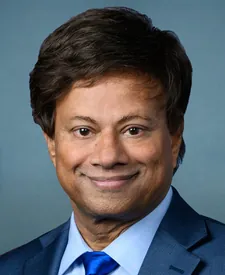
 Democrat
Shri Thanedar
Rank #34Democratic U.S. Representative for Michigan's 13th congressional district (Detroit and Downriver, since 2023). Born in Karnataka, India, he immigrated to the U.S. with $20, earned a Polymer Chemistry PhD, rebuilt after a 2008 business collapse, and sold his majority stake in Ann Arbor lab firm Avomeen Analytical Services.
~$61.9M Clerk of the U.S. House of Representatives (Form OGE-278)
Statutory U.S. House base pay
3.5 centuries of public pay
321× median US family net worth
Where Shri Thanedar Stands: Core Political Positions
Key legislative priorities and core political philosophy across major policy domains:
- • Minority & Immigrant Founder Capital: Sits on the House Small Business Committee pushing SBA loan expansion and R&D tax credits for Michigan startups.
- • Domestic Chemical & Pharma Testing: Supports reshoring laboratory testing and pharmaceutical supply chains to Midwest hubs.
Brings firsthand PhD-chemist and small-business founder experience to Detroit economic policy.
Critics resurfaced 2008–2010 Azopharma receivership lawsuits involving abandoned animal-testing facilities.
- • Universal Healthcare Advocacy: Co-sponsors Medicare for All legislation and supports capping out-of-pocket insulin and generic drug prices.
- • Detroit Hospital Funding: Fights for federal Medicaid disproportionate-share hospital funding across Wayne County.
Aligns strongly with progressive Detroit primary voters.
Business coalitions argue single-payer transitions would raise federal payroll and corporate taxes.
- • Lead Pipe & Flooding Remediation: Secured federal community-project grants for Wayne County sewer upgrades and lead service-line replacements.
- • Auto-Worker EV Transition: Backs UAW wage protections alongside federal EV battery manufacturing incentives.
Delivers direct federal water and flood-mitigation dollars to Detroit neighborhoods.
Local political rivals frequently accuse him of using self-funded mailers to overshadow grassroots organizers.
- • Multi-Million Self-Funding: Spent over $10M of personal funds in his 2018 Michigan gubernatorial run and millions more in Detroit House races.
- • Active Brokerage & Treasury Holdings: OGE-278 disclosures show substantial cash, Treasury bills, and large-cap brokerage portfolios from his Avomeen exit.
Insulates his congressional voting record from corporate PAC money.
Primary challengers argue personal wealth buys unmatched name-recognition saturation.
Disclosed Asset Portfolio Breakdown
High-level asset allocation compiled from official public financial disclosure filings (Clerk of the U.S. House of Representatives (Form OGE-278)):
Avomeen Analytical Services Sale
Majority sale proceeds (2016) and residual exit capital from Ann Arbor chemical-testing firm Avomeen, acquired by private equity.
Brokerage Equities & Money Market
Tens of millions held across liquid U.S. equities, mutual funds, Treasury bills, and cash sweep accounts.
Michigan Residential & Commercial Assets
Detroit and Ann Arbor area residential real estate and closely held investment LLCs.
Congressional Base Salary
Statutory $174,000 U.S. House salary alongside House Small Business and Homeland Security committee assignments.
The STOCK Act & The Congressional Trading Controversy
Why do congressional wealth disclosures and stock portfolios make global headlines? The answer lies at the intersection of constitutional ethics, insider access, and a federal law known as the STOCK Act.
What the Law Requires
Signed by President Obama, the Stop Trading on Congressional Knowledge Act made it explicitly illegal for lawmakers to profit from non-public information learned on the job, mandating public disclosure of all stock trades over $1,000 within 45 days.
Why Critics Cry Foul
Lawmakers receive classified intelligence briefings, direct testimony from CEOs, and advance notice of regulatory subsidies. Retail traders argue sitting members of Congress possess an unfair structural advantage in capital markets.
Blind Trusts vs. Banning Stocks
Public outcry over timely stock trades has spurred bipartisan support for proposals like the ETHICS Act, seeking to legally ban all sitting members of Congress and spouses from owning or trading individual equities while holding federal office.
Can Politicians Pocket Campaign Donations? Understanding FEC Law
A widespread public misconception is that politicians get rich from campaign contributions. Federal election law strictly separates political campaign warchests from personal household bank accounts.
~$61.9M Disclosed Personal Wealth
Earned through private business enterprise, executive compensation, real estate appreciation, and market investments. Every dollar is subject to personal federal, state, and capital gains taxes.
Regulated Political Committee Funds
Official campaign funds raised from donors to finance advertising, field staff, and voter turnout operations. Regulated under strict Federal Election Commission guidelines.
How Shri Thanedar lost his Chemir empire in 2008 and rebuilt via Avomeen
After growing Chemir Analytical Services from a $75,000 loan into a multi-million-dollar enterprise—only to lose everything during the 2008 Azopharma collapse—Thanedar founded Avomeen in 2010 and sold a majority stake in 2016, securing his $61.9M disclosed net worth.
Avomeen's 2016 private equity sale turned a post-recession restart into one of the 35 largest fortunes in Congress.
MI-13 has a median household income near $43,000, making Thanedar's $61.9M portfolio a striking contrast with his constituency.
Key Milestones: Shri Thanedar's Political Career
Chronological milestones across public office and private enterprise:
Moved to U.S. for Chemistry PhD
Immigrated from India to pursue a PhD in Polymer Chemistry at the University of Akron.
Bought Chemir Analytical Services
Acquired a struggling three-person lab for $75,000 and scaled it across multiple states.
Azopharma Collapse
Lost his personal fortune and entered receivership during the Great Recession.
Founded Avomeen in Ann Arbor
Launched Avomeen Analytical Services with his sons, growing it rapidly.
Sold Majority Stake in Avomeen
Sold majority ownership to High Street Capital, securing eight-figure liquidity.
Self-Funded Governor Bid
Spent $10M+ of his own money in the Michigan Democratic gubernatorial primary.
Elected Michigan State Representative
Won a Detroit seat in the Michigan House of Representatives.
Sworn Into U.S. House (MI-13)
Elected to Congress in 2022 and re-elected in 2024.
How Does Shri Thanedar Compare to Other Wealthy Leaders?
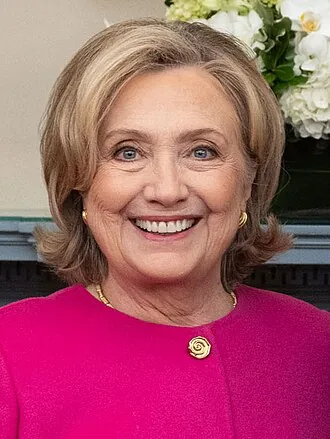
Shri Thanedar sits at rank #34 in the 119th Congress, directly flanked by closest wealth peers across the legislature. View full United States leaderboard
| Rank | Lawmaker | Disclosed Net Worth |
|---|---|---|
| #32 |
Republican
|
$64,500,187
USD
|
| #33 |
Republican
|
$63,706,059
USD
|
| #34 |
Shri Thanedar (MI-13)
Democrat
|
$61,904,382
USD
|
| #35 |
Republican
|
$55,418,208
USD
|
| #36 |
Hillary Clinton (New York (NY))
Democrat
|
$55,000,000
USD
|
Can you deduce today's mystery lawmaker?
Every day, Worthle features a new mystery politician. Unlock clues about their salary, investments, and disclosed net worth to guess their identity and discover how public leaders build wealth.
Frequently Asked Questions: Shri Thanedar's Net Worth
What is Shri Thanedar's net worth in 2026?
Based on congressional OGE-278 financial disclosures, Shri Thanedar's net worth is approximately $61,904,382, ranking #34 in the 119th Congress.
How did Shri Thanedar make his money?
He earned a PhD in Chemistry, built Chemir Analytical Services before losing it in 2008, and then founded Ann Arbor-based Avomeen Analytical Services in 2010—selling a majority stake in 2016 for tens of millions.
How much has Shri Thanedar spent self-funding campaigns?
Across his 2018 gubernatorial campaign and subsequent Detroit congressional races, Thanedar has self-funded more than $15 million.
What is Shri Thanedar's salary in Congress?
As a U.S. Representative, he earns the statutory $174,000 annual congressional salary.
Explore More United States Lawmaker Wealth Dossiers
View All →
Explore the Full Legislative Wealth Rankings
Discover how other prominent leaders compare across the national proximity index.