


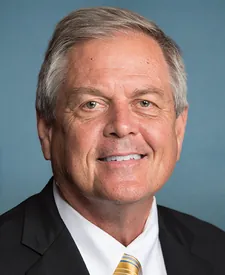
 Republican
Ralph Norman
Rank #33Republican U.S. Representative for South Carolina's 5th congressional district (since 2017) and House Freedom Caucus member. Longtime commercial real estate developer who expanded the family-founded Warren Norman Company across the Charlotte metro and Upstate South Carolina corridor.
~$63.7M Clerk of the U.S. House of Representatives (Form OGE-278)
Statutory U.S. House base pay
3.6 centuries of public pay
330× median US family net worth
Where Ralph Norman Stands: Core Political Positions
Key legislative priorities and core political philosophy across major policy domains:
- • House Budget & Rules Committees: Consistently opposes omnibus spending bills and debt-ceiling hikes lacking enforceable federal spending caps.
- • Zero-Based Federal Budgeting: Advocates clawing back unspent federal program funds and indexing discretionary caps to pre-pandemic baselines.
Praised by fiscal hawks as one of Congress's most consistent deficit-reduction hardliners.
Moderates argue brinkmanship over government shutdowns threatens military and federal contractor pay.
- • 1031 Like-Kind Exchange Defense: Strongly defends 1031 real-estate tax deferrals, Opportunity Zones, and pass-through QBI deductions.
- • Federal Permitting Streamlining: Supports curbing EPA wetlands and NEPA environmental review delays on commercial construction.
Draws on five decades of hands-on Carolinas commercial development experience.
Ethics watchdogs note direct personal overlap between tax-code real estate preferences and his development holdings.
- • Constitutional Term Limits: Sponsors constitutional amendments capping House members at three terms and Senators at two terms.
- • Single-Subject Legislation Rule: Pushes House rules requiring standalone single-subject appropriations bills with 72-hour public review.
Appeals strongly to populist voters frustrated with career Washington insiders.
Critics note he has served nearly a decade himself while continuing to run for re-election.
- • I-77 & Charlotte Growth Corridor: Supports state-led highway widening and industrial park expansion across York, Lancaster, and Chester counties.
- • Right-to-Work Protections: Backs national right-to-work legislation to keep Palmetto State manufacturing competitive.
Aligned with York County's rapid suburban and industrial boom south of Charlotte.
Labor unions argue right-to-work laws depress regional hourly manufacturing wages.
Disclosed Asset Portfolio Breakdown
High-level asset allocation compiled from official public financial disclosure filings (Clerk of the U.S. House of Representatives (Form OGE-278)):
Warren Norman Company & Retail Plazas
Substantial equity across dozens of Rock Hill and Upstate South Carolina shopping centers, office buildings, and commercial land LLCs.
Piedmont Development Acreage
Multi-tract undeveloped commercial and residential land parcels positioned along the booming I-77 Charlotte growth corridor.
Mutual Funds & Retirement Accounts
Diversified brokerage mutual funds, IRAs, and fixed-income holdings declared on annual Form OGE-278.
Commercial Lease Cash Flows
Recurring commercial rental and partnership distributions flowing from long-term retail and industrial tenants.
The STOCK Act & The Congressional Trading Controversy
Why do congressional wealth disclosures and stock portfolios make global headlines? The answer lies at the intersection of constitutional ethics, insider access, and a federal law known as the STOCK Act.
What the Law Requires
Signed by President Obama, the Stop Trading on Congressional Knowledge Act made it explicitly illegal for lawmakers to profit from non-public information learned on the job, mandating public disclosure of all stock trades over $1,000 within 45 days.
Why Critics Cry Foul
Lawmakers receive classified intelligence briefings, direct testimony from CEOs, and advance notice of regulatory subsidies. Retail traders argue sitting members of Congress possess an unfair structural advantage in capital markets.
Blind Trusts vs. Banning Stocks
Public outcry over timely stock trades has spurred bipartisan support for proposals like the ETHICS Act, seeking to legally ban all sitting members of Congress and spouses from owning or trading individual equities while holding federal office.
Can Politicians Pocket Campaign Donations? Understanding FEC Law
A widespread public misconception is that politicians get rich from campaign contributions. Federal election law strictly separates political campaign warchests from personal household bank accounts.
~$63.7M Disclosed Personal Wealth
Earned through private business enterprise, executive compensation, real estate appreciation, and market investments. Every dollar is subject to personal federal, state, and capital gains taxes.
Regulated Political Committee Funds
Official campaign funds raised from donors to finance advertising, field staff, and voter turnout operations. Regulated under strict Federal Election Commission guidelines.
How Rock Hill retail plazas and I-77 growth built a $63.7M House fortune
Joining his father's Rock Hill firm in 1975, Ralph Norman spent four decades assembling retail centers, office parks, and Piedmont land tracts—turning regional commercial leases into a $63.7M+ disclosed portfolio (#33 in Congress).
Norman's OGE-278 filing spans dozens of individually named commercial property LLCs across York and Lancaster counties.
Against South Carolina's ~$67,800 median household income, Norman's net worth equals ~330× typical U.S. family wealth.
Key Milestones: Ralph Norman's Political Career
Chronological milestones across public office and private enterprise:
Joined Warren Norman Company
Graduated Presbyterian College and entered his family's Rock Hill commercial real estate firm.
Scaled Upstate Commercial Portfolio
Developed shopping centers and industrial parks across the Carolinas.
Elected to SC House of Representatives
Won District 48 in the South Carolina State House, serving 2005–2007 and 2009–2017.
Won SC-05 Special Election
Narrowly won the June 2017 special election to succeed Mick Mulvaney in the U.S. House.
Joined House Freedom Caucus
Became a vocal member of the conservative House Freedom Caucus.
Named to House Rules Committee
Secured a key seat on the powerful House Rules Committee shaping floor legislation.
Won Fifth Congressional Term
Cruised to re-election in South Carolina's 5th district.
119th Congress Budget Push
Continues leading deficit-cap and term-limit negotiations in the House.
How Does Ralph Norman Compare to Other Wealthy Leaders?
Ralph Norman sits at rank #33 in the 119th Congress, directly flanked by closest wealth peers across the legislature. View full United States leaderboard
| Rank | Lawmaker | Disclosed Net Worth |
|---|---|---|
| #31 |
Republican
|
$65,000,000
USD
|
| #32 |
Republican
|
$64,500,187
USD
|
| #33 |
Ralph Norman (SC-5)
Republican
|
$63,706,059
USD
|
| #34 |
Democrat
|
$61,904,382
USD
|
| #35 |
Republican
|
$55,418,208
USD
|
Can you deduce today's mystery lawmaker?
Every day, Worthle features a new mystery politician. Unlock clues about their salary, investments, and disclosed net worth to guess their identity and discover how public leaders build wealth.
Frequently Asked Questions: Ralph Norman's Net Worth
What is Ralph Norman's net worth in 2026?
Based on House Form OGE-278 financial disclosures, Ralph Norman's disclosed net worth is approximately $63,706,059, ranking #33 in Congress.
How did Ralph Norman make his money?
He built his fortune over five decades in commercial real estate development and leasing through the family-founded Warren Norman Company in Rock Hill, South Carolina.
What does Ralph Norman's OGE-278 disclosure list?
His annual congressional disclosure itemizes dozens of South Carolina commercial real estate LLCs, shopping plazas, undeveloped Piedmont land tracts, and diversified mutual funds.
What is Ralph Norman's salary in Congress?
As a U.S. Representative, he earns the statutory $174,000 annual congressional base salary.
Explore More United States Lawmaker Wealth Dossiers
View All →
Explore the Full Legislative Wealth Rankings
Discover how other prominent leaders compare across the national proximity index.