


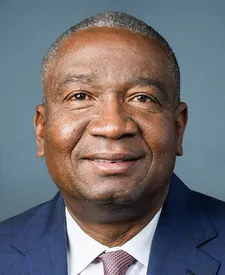
 Democrat
Cleo Fields
Rank #30Representative for Louisiana's 6th Congressional District elected in 2024, having previously served in the U.S. House (1993–1997) and the Louisiana State Senate for over two decades. Founder of the Fields Law Firm, attorney, and commercial real estate investor who built extensive commercial property and legal consulting holdings in Baton Rouge.
~$65.2M House Committee on Ethics (Form OGE-278)
Statutory congressional salary since 2009
4 centuries of congressional compensation
338× median American family net worth
Where Cleo Fields Stands: Core Political Positions
Key legislative priorities and core political philosophy across major policy domains:
- • Petrochemical Workforce Standards: Advocates federal workforce training partnerships ensuring local Louisiana workers secure high-wage technical jobs in the River Parish industrial corridor.
- • Clean Infrastructure Grants: Secures federal environmental mitigation funding to reduce industrial air and water emissions affecting adjacent historic African American communities.
Balances vital energy manufacturing jobs with crucial public health protections for river communities.
Industrial trade associations voice concern over expanded federal environmental enforcement standards.
- • Endowment Matching Grants: Championed historic state and federal funding parity for Historically Black Colleges and Universities (HBCUs), including Southern University.
- • Pell Grant Expansion: Advocates doubling the maximum federal Pell Grant award to ensure low-income students can complete debt-free undergraduate degrees.
Directly empowers historic higher education institutions that drive Black economic mobility in Louisiana.
Fiscal conservatives argue universal grant increases should be paired with institutional graduation accountability.
- • Army Corps Levee Funding: Fights for accelerated federal Army Corps of Engineers funding to reinforce Comite River and Amite River basin flood mitigation channels.
- • National Flood Insurance Affordability: Introduced legislation capping Risk Rating 2.0 premium increases to prevent middle-class families from being priced out of homeowners insurance.
Essential pocketbook protection for coastal and riverine families vulnerable to catastrophic hurricane flooding.
FEMA actuaries argue premium rates must reflect true actuarial flood risks to keep the NFIP solvent.
- • John Lewis Voting Rights Act: Co-sponsors legislation restoring federal preclearance protections under the Voting Rights Act to safeguard minority voting access.
- • Second-Chance Re-Entry Programs: Advocates federal grants supporting vocational job training, record expungement, and restorative justice for formerly incarcerated individuals.
Protects fundamental democratic representation and dismantles systemic barriers to employment after incarceration.
Law enforcement groups favor maintaining strict judicial sentencing guidelines for repeat offenses.
Disclosed Asset Portfolio Breakdown
High-level asset allocation compiled from official public financial disclosure filings (House Committee on Ethics (Form OGE-278)):
Fields Law Firm & Civil Litigation Equity
Substantial foundational commercial wealth built through founding and managing the Fields Law Firm in Baton Rouge, specializing in high-stakes civil litigation, personal injury, and corporate advisory practice.
Baton Rouge Commercial & Retail Properties
Extensive commercial real estate portfolio including office buildings, shopping centers, and developer parcels throughout East Baton Rouge Parish.
Louisiana Legislative Retirement Pension
Substantial actuarially accrued defined benefit pension rights from over 24 years in the Louisiana State Senate and previous congressional service.
Broad-Market Equities & Banking Assets
Diversified public corporate equities, municipal bonds, and liquid banking reserves declared under congressional Form OGE-278.
The STOCK Act & The Congressional Trading Controversy
Why do congressional wealth disclosures and stock portfolios make global headlines? The answer lies at the intersection of constitutional ethics, insider access, and a federal law known as the STOCK Act.
What the Law Requires
Signed by President Obama, the Stop Trading on Congressional Knowledge Act made it explicitly illegal for lawmakers to profit from non-public information learned on the job, mandating public disclosure of all stock trades over $1,000 within 45 days.
Why Critics Cry Foul
Lawmakers receive classified intelligence briefings, direct testimony from CEOs, and advance notice of regulatory subsidies. Retail traders argue sitting members of Congress possess an unfair structural advantage in capital markets.
Blind Trusts vs. Banning Stocks
Public outcry over timely stock trades has spurred bipartisan support for proposals like the ETHICS Act, seeking to legally ban all sitting members of Congress and spouses from owning or trading individual equities while holding federal office.
Can Politicians Pocket Campaign Donations? Understanding FEC Law
A widespread public misconception is that politicians get rich from campaign contributions. Federal election law strictly separates political campaign warchests from personal household bank accounts.
~$65.2M Disclosed Personal Wealth
Earned through private business enterprise, executive compensation, real estate appreciation, and market investments. Every dollar is subject to personal federal, state, and capital gains taxes.
Regulated Political Committee Funds
Official campaign funds raised from donors to finance advertising, field staff, and voter turnout operations. Regulated under strict Federal Election Commission guidelines.
The District Dilemma: Connecting Urban Baton Rouge with Cajun Country and River Parishes
The newly configured LA-06 is a majority-minority district stretching from Baton Rouge through Cajun country in Lafayette and across the industrial Mississippi River Parishes.
Home to massive global chemical refining complexes and deepwater shipping terminals driving the state's industrial economy.
Low-lying residential neighborhoods face severe hurricane and bayou flood risks alongside soaring private insurance premiums.
Key Milestones: Cleo Fields's Political Career
Chronological milestones across public office and private enterprise:
Youngest State Senator in Louisiana History
Elected to the Louisiana State Senate at age 24, becoming the youngest state senator in modern American history.
Elected to the 103rd Congress
Elected to the U.S. House of Representatives for Louisiana's 4th District, serving two terms in Washington.
Historic Gubernatorial Runoff
Wins the Democratic nomination and advances to the general election runoff for Governor of Louisiana, energizing state voters.
Founded Fields Law Firm
Founds the Fields Law Firm in Baton Rouge, building a highly successful commercial litigation and personal injury law practice.
Re-Elected to Louisiana State Senate
Returns to the Louisiana State Senate, serving continuously for decades and authoring major education and criminal justice reforms.
Chairman of Senate Education Committee
Serves as Chairman of the Louisiana Senate Education Committee, championing historic funding increases for public schools and HBCUs.
Elected to the 119th Congress
Wins election to Louisiana's newly created 6th Congressional District, returning to Capitol Hill after nearly three decades.
Sworn into the 119th Congress
Takes the oath of office in the U.S. House of Representatives, appointed to key committees directing infrastructure and workforce policy.
How Does Cleo Fields Compare to Other Wealthy Leaders?
Cleo Fields sits at rank #30 in the 119th Congress, directly flanked by closest wealth peers across the legislature. View full United States leaderboard
| Rank | Lawmaker | Disclosed Net Worth |
|---|---|---|
| #28 |

Mitch McConnell (KY)
Republican
|
$70,400,000
USD
|
| #29 |

Republican
|
$70,000,000
USD
|
| #30 |
Cleo Fields (LA-6)
Democrat
|
$65,220,785
USD
|
| #31 |
Republican
|
$65,000,000
USD
|
| #32 |
Republican
|
$64,500,187
USD
|
Can you deduce today's mystery lawmaker?
Every day, Worthle features a new mystery politician. Unlock clues about their salary, investments, and disclosed net worth to guess their identity and discover how public leaders build wealth.
Frequently Asked Questions: Cleo Fields's Net Worth
What is Cleo Fields' net worth in 2026?
Cleo Fields has an estimated personal net worth of $65,220,785 (~$65.2 Million), ranking #30 in the U.S. Congress. His fortune was built over decades as a successful attorney and founder of the Fields Law Firm in Baton Rouge, alongside extensive commercial real estate holdings, office developments, and diversified investment portfolios in Louisiana.
When did Cleo Fields serve in Congress previously?
Cleo Fields previously served in the United States House of Representatives from 1993 to 1997 representing Louisiana's 4th Congressional District. He returned to Congress in January 2025 following his election in Louisiana's newly configured 6th Congressional District.
What businesses does Cleo Fields own?
Fields is the founder and owner of the Fields Law Firm, a prominent civil and corporate litigation firm in Baton Rouge. He also owns extensive commercial property parcels, office complexes, and retail real estate throughout East Baton Rouge Parish.
What is Cleo Fields' salary as a Member of Congress?
As a member of the U.S. House of Representatives, Cleo Fields receives the standard statutory base salary of $174,000 per year set under federal law.
Explore More United States Lawmaker Wealth Dossiers
View All →
Explore the Full Legislative Wealth Rankings
Discover how other prominent leaders compare across the national proximity index.