


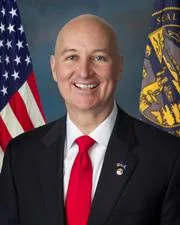
 Republican
Pete Ricketts
Rank #29United States Senator from Nebraska. Former two-term Governor of Nebraska, corporate executive at TD Ameritrade, and prominent co-owner of the Chicago Cubs Major League Baseball franchise.
~$217.9M Form OGE-278
Statutory pay since 2009
12 centuries of public pay
1,130× median US family
Where Pete Ricketts Stands: Core Political Positions
Key legislative priorities and core political philosophy across major policy domains:
- • Ethanol & Year-Round E15: Fiercely defends the Renewable Fuel Standard and sponsors legislation legalizing year-round nationwide sales of E15 bioethanol to support corn growers.
- • Beef & Grain Export Markets: Advocates aggressive bilateral trade agreements to open Southeast Asian and Japanese markets to Nebraska beef and soybean producers.
Directly expands revenues for Midwestern farmers and sustains the backbone of Nebraska's agribusiness economy.
Critics argue corn-ethanol mandates distort global food markets and maintain intensive fertilizer runoff into watersheds.
- • Originalist Judges: Serves on the Senate Judiciary Committee, prioritizing the confirmation of strict constructionist federal judges who limit executive administrative overreach.
- • State Regulatory Primacy: Pushes to overturn federal Environmental Protection Agency rules like WOTUS (Waters of the United States) that affect agricultural drainage ditches.
Restores constitutional separation of powers and shields family farms from heavy federal environmental penalties.
Rollbacks of federal clean water and air oversight threaten downstream ecosystems and regional water security.
- • Spending Caps & Sequester Models: Champions federal budget discipline mirroring his gubernatorial tenure, where state spending growth was legally held below historical inflation rates.
- • Flat Tax Advocacy: Proposes flattening federal individual and corporate tax rates, eliminating targeted industrial subsidies in favor of universal low brackets.
Curbs inflation driven by debt-fueled federal spending and stimulates broader entrepreneurial initiative.
Flat tax structures shift a proportionally greater tax burden onto middle-class wage earners while slashing social programs.
- • Decoupling from Strategic Adversaries: Sponsors bills banning Chinese-backed entities from purchasing American agricultural farmland or operating critical telecom networks.
- • Defense Industrial Base Support: Supports major recapitalization of Strategic Command (STRATCOM) located at Offutt Air Force Base in Omaha.
Hardens American national defense against cyber and nuclear threats while preserving domestic food security.
Strict farmland investment bans risk retaliatory trade barriers on American agricultural exports.
Disclosed Asset Portfolio Breakdown
High-level asset allocation compiled from official public financial disclosure filings (Form OGE-278):
TD Ameritrade / Charles Schwab Shares
Substantial family trust equity originating from the founding of Ameritrade by his father Joe Ricketts, later converted into Charles Schwab equity following their multi-billion dollar merger.
Chicago Cubs & Wrigley Field Stake
Significant equity interest in the Chicago Cubs Major League Baseball club, Wrigley Field, and the Marquee Sports Network, held through family investment partnerships.
Technology & Consumer Funds
Placements in mid-market private equity funds, fintech startups, and private credit syndicates managed through independent investment trustees.
Nebraska Farmland & Real Estate
Income-generating Midwestern agricultural acreage, commercial office facilities in Omaha, and residential property trusts.
The STOCK Act & The Congressional Trading Controversy
Why do congressional wealth disclosures and stock portfolios make global headlines? The answer lies at the intersection of constitutional ethics, insider access, and a federal law known as the STOCK Act.
What the Law Requires
Signed by President Obama, the Stop Trading on Congressional Knowledge Act made it explicitly illegal for lawmakers to profit from non-public information learned on the job, mandating public disclosure of all stock trades over $1,000 within 45 days.
Why Critics Cry Foul
Lawmakers receive classified intelligence briefings, direct testimony from CEOs, and advance notice of regulatory subsidies. Retail traders argue sitting members of Congress possess an unfair structural advantage in capital markets.
Blind Trusts vs. Banning Stocks
Public outcry over timely stock trades has spurred bipartisan support for proposals like the ETHICS Act, seeking to legally ban all sitting members of Congress and spouses from owning or trading individual equities while holding federal office.
Can Politicians Pocket Campaign Donations? Understanding FEC Law
A widespread public misconception is that politicians get rich from campaign contributions. Federal election law strictly separates political campaign warchests from personal household bank accounts.
~$217.9M Disclosed Personal Wealth
Earned through private business enterprise, executive compensation, real estate appreciation, and market investments. Every dollar is subject to personal federal, state, and capital gains taxes.
Regulated Political Committee Funds
Official campaign funds raised from donors to finance advertising, field staff, and voter turnout operations. Regulated under strict Federal Election Commission guidelines.
The Senate Dilemma: Balancing the Cornhusker Economy
Nebraska combines a massive agricultural heartland with Omaha's high-density financial, insurance, and telecommunications corporate sector.
Omaha serves as a global insurance and financial nerve center (Berkshire Hathaway, Mutual of Omaha), demanding stability in capital gains and banking laws.
Outstate Nebraska relies entirely on cattle ranching, corn and soybean harvests, highly vulnerable to international trade disputes and drought conditions.
Key Milestones: Pete Ricketts's Political Career
Chronological milestones across public office and private enterprise:
Joined Ameritrade Executive Team
Entered executive leadership at his family's brokerage firm, serving as Chief Operating Officer and overseeing its rapid transformation into an online discount trading giant.
First U.S. Senate Bid
Won the Nebraska Republican primary and challenged incumbent Democratic Senator Ben Nelson, self-funding over $11M in an instructive first bid for federal office.
Acquisition of the Chicago Cubs
The Ricketts family completed the historic $845M acquisition of the Chicago Cubs baseball team and Wrigley Field from the Tribune Company.
Elected 40th Governor of Nebraska
Elected Governor of Nebraska, running on a platform of fiscal discipline, tax reform, and opening global markets for Nebraska beef and grain.
Re-Elected Governor in Landslide
Won a second term as governor by a 19-point margin, subsequently managing statewide disaster recovery from catastrophic 2019 Missouri River flooding.
Appointed to the United States Senate
Following Senator Ben Sasse's resignation, incoming Governor Jim Pillen appointed Ricketts to fill the vacant U.S. Senate seat.
Elected in Special Senate Election
Won the special election to complete the remaining two years of Sasse's Senate term, winning broad majorities across both rural and urban counties.
Senior Leadership in the 119th Congress
Continues active service on the Senate Foreign Relations, Environment & Public Works, and Rules committees, solidifying rank as one of the Senate's top ten wealthiest members.
How Does Pete Ricketts Compare to Other Wealthy Leaders?
Pete Ricketts sits at rank #29 in the 119th Congress, directly flanked by closest wealth peers across the legislature. View full United States leaderboard
| Rank | Lawmaker | Disclosed Net Worth |
|---|---|---|
| #27 |
Republican
|
$75,000,000
USD
|
| #28 |
Mitch McConnell (KY)
Republican
|
$70,400,000
USD
|
| #29 |
Pete Ricketts (NE)
Republican
|
$70,000,000
USD
|
| #30 |
Democrat
|
$65,220,785
USD
|
| #31 |
Republican
|
$65,000,000
USD
|
Can you deduce today's mystery lawmaker?
Every day, Worthle features a new mystery politician. Unlock clues about their salary, investments, and disclosed net worth to guess their identity and discover how public leaders build wealth.
Frequently Asked Questions: Pete Ricketts's Net Worth
What is Pete Ricketts' net worth in 2026?
Pete Ricketts has an exact disclosed minimum net worth of $217,923,431 (~$217.9 Million) based on official federal filings (Form OGE-278), ranking him #7 overall in the 119th Congress.
Where does Pete Ricketts' wealth come from?
Pete Ricketts' fortune stems from his executive tenure and equity in TD Ameritrade (now Charles Schwab), co-ownership of the Chicago Cubs MLB franchise and Wrigley Field, and private equity trusts.
What is Pete Ricketts' salary as a U.S. Senator?
As a United States Senator, Pete Ricketts receives the statutory annual salary of $174,000.
How does Pete Ricketts' wealth compare to an average American family?
Pete Ricketts' disclosed fortune of $217.9M is over 1,130 times higher than the median American household net worth ($192,900) and equals more than 1,252 years of statutory Senate salary.
Explore More United States Lawmaker Wealth Dossiers
View All →
Explore the Full Legislative Wealth Rankings
Discover how other prominent leaders compare across the national proximity index.