


 Democrat
April McClain Delaney
Rank #16Representative for Maryland's 6th Congressional District. Regulatory attorney, former Commerce Department NTIA deputy administrator, digital safety advocate, and spouse of former Congressman John Delaney.
~$199.2M Form OGE-278
Statutory pay since 2009
11 centuries of public pay
1,033× median US family
Where April McClain Delaney Stands: Core Political Positions
Key legislative priorities and core political philosophy across major policy domains:
- • Kids Online Safety Act (KOSA): Leading congressional voice requiring social media platforms to design products that prevent algorithmic harm, cyberbullying, and teen exploitation.
- • COPPA 2.0 Legislation: Advocates updating the Children's Online Privacy Protection Act to extend data tracking bans to teenagers aged 13 through 16.
Empowers parents with enforceable protections against predatory tech algorithms targeting children.
Tech industry trade groups argue broad design mandates could inadvertently restrict youth access to informative online resources.
- • BEAD Program Oversight: Draws on her tenure at the NTIA to oversee the $42.5B Broadband Equity, Access, and Deployment program, eliminating red tape for rural Maryland fiber installs.
- • Satellite & Cellular Permitting: Sponsors legislation expediting federal permits for telecommunications towers across mountainous western Maryland counties.
Brings essential high-speed telemedicine and remote work capabilities to Appalachian Maryland.
Over-reliance on federal subsidies can crowd out private competitive telecom capital deployment.
- • Public-Private Infrastructure Financing: Advocates establishing national infrastructure financing banks to leverage private capital for bridge and highway modernization.
- • Biotech Research Tax Credits: Supports expanding R&D credits for Maryland's I-270 technology and life sciences corridor, encouraging pharmaceutical manufacturing.
Drives private investment into high-wage medical research and regional transportation corridors.
Public-private partnerships risk shifting toll fees and public liabilities onto taxpayers.
- • Bipartisan Working Groups: Affiliated with the moderate Problem Solvers Caucus, prioritizing compromise on federal debt limits and fiscal appropriations.
- • Procurement Efficiency: Pushes for modernizing federal software procurement to save billions across legacy government IT contracts.
Offers constructive pragmatic governance that bridges polarized partisan divisions.
Progressive caucuses criticize middle-of-the-road compromises that dilute progressive spending goals.
Disclosed Asset Portfolio Breakdown
High-level asset allocation compiled from official public financial disclosure filings (Form OGE-278):
CapitalSource & Health Care Financial Partners
Wealth foundation built by husband John Delaney through founding and taking public commercial lender CapitalSource and Health Care Financial Partners.
Venture Funds & Healthcare Equities
Extensive placements in private equity growth funds, medical device startups, and commercial mezzanine financing entities.
Montgomery County & Coastal Properties
Luxury residential estate in Potomac, Maryland, commercial parcels along the I-270 tech corridor, and vacation residential properties.
Municipal Bonds & Liquid Reserves
Substantial portfolio of tax-exempt municipal bonds and institutional cash equivalents held across family investment trusts.
The STOCK Act & The Congressional Trading Controversy
Why do congressional wealth disclosures and stock portfolios make global headlines? The answer lies at the intersection of constitutional ethics, insider access, and a federal law known as the STOCK Act.
What the Law Requires
Signed by President Obama, the Stop Trading on Congressional Knowledge Act made it explicitly illegal for lawmakers to profit from non-public information learned on the job, mandating public disclosure of all stock trades over $1,000 within 45 days.
Why Critics Cry Foul
Lawmakers receive classified intelligence briefings, direct testimony from CEOs, and advance notice of regulatory subsidies. Retail traders argue sitting members of Congress possess an unfair structural advantage in capital markets.
Blind Trusts vs. Banning Stocks
Public outcry over timely stock trades has spurred bipartisan support for proposals like the ETHICS Act, seeking to legally ban all sitting members of Congress and spouses from owning or trading individual equities while holding federal office.
Can Politicians Pocket Campaign Donations? Understanding FEC Law
A widespread public misconception is that politicians get rich from campaign contributions. Federal election law strictly separates political campaign warchests from personal household bank accounts.
~$199.2M Disclosed Personal Wealth
Earned through private business enterprise, executive compensation, real estate appreciation, and market investments. Every dollar is subject to personal federal, state, and capital gains taxes.
Regulated Political Committee Funds
Official campaign funds raised from donors to finance advertising, field staff, and voter turnout operations. Regulated under strict Federal Election Commission guidelines.
The District Dilemma: Representing the I-270 Tech Hub to Western Maryland (MD-06)
MD-06 stretches from affluent Montgomery County suburbs (Gaithersburg, Potomac) across rural Frederick, Washington, Allegany, and Garrett counties to the West Virginia border.
Lower district communities house NIH research hubs, global biotech firms, and high-income federal contracting professionals.
Mountainous western counties face coal phase-outs, manufacturing decline, rural broadband deficits, and aging demographic trends.
Key Milestones: April McClain Delaney's Political Career
Chronological milestones across public office and private enterprise:
Telecom Regulatory Practice
Built a prominent communications regulatory career in Washington, counseling telecom and media companies on FCC compliance and broadcast spectrum.
Washington Director of Common Sense Media
Joined Common Sense Media as Washington Director, spearheading national legislative campaigns on children's digital literacy and media ratings.
Partner in Congressional Service
Supported husband John Delaney during his three terms representing MD-06, maintaining deep civic connections across western Maryland communities.
Deputy Administrator of NTIA
Appointed by President Biden as Deputy Administrator of the National Telecommunications and Information Administration, managing the historic $42.5B BEAD broadband rollout.
Announced Congressional Bid
Stepped down from federal service to launch her congressional campaign for Maryland's 6th District after Rep. David Trone vacated the seat to run for Senate.
Won Highly Competitive Primary
Won the Democratic primary over a competitive field of state lawmakers, championing a blend of tech expertise and pragmatic economic governance.
Elected to the 119th U.S. Congress
Won the pivotal battleground seat against former state delegate Neil Parrott, ensuring Democratic retention of Western Maryland's congressional seat.
Took Seat in 119th Congress
Sworn into the 119th Congress, securing seats on the Energy & Commerce and Science, Space & Technology committees as one of the wealthiest women in Congress.
How Does April McClain Delaney Compare to Other Wealthy Leaders?
April McClain Delaney sits at rank #16 in the 119th Congress, directly flanked by closest wealth peers across the legislature. View full United States leaderboard
| Rank | Lawmaker | Disclosed Net Worth |
|---|---|---|
| #14 |

Democrat
|
$215,000,000
USD
|
| #15 |

Democrat
|
$207,890,389
USD
|
| #16 |
April McClain Delaney (MD-6)
Democrat
|
$199,172,093
USD
|
| #17 |

Republican
|
$174,587,631
USD
|
| #18 |

Dave McCormick (Pennsylvania (PA))
Republican
|
$170,000,000
USD
|
Can you deduce today's mystery lawmaker?
Every day, Worthle features a new mystery politician. Unlock clues about their salary, investments, and disclosed net worth to guess their identity and discover how public leaders build wealth.
Frequently Asked Questions: April McClain Delaney's Net Worth
What is April McClain Delaney's net worth in 2026?
April McClain Delaney has an exact disclosed minimum net worth of $199,172,093 (~$199.2 Million) based on official federal filings (Form OGE-278), ranking her #10 overall in the 119th Congress.
What are the origins of April McClain Delaney's fortune?
Her family wealth originates from husband John Delaney's founding of successful commercial finance firms CapitalSource and Health Care Financial Partners, paired with commercial real estate, venture investments, and telecom advisory assets.
What is April McClain Delaney's congressional salary?
As a member of the U.S. House of Representatives, April McClain Delaney receives the standard statutory base salary of $174,000 per year.
How does April McClain Delaney's wealth compare to everyday Americans?
Her disclosed fortune of $199.2M is over 1,033 times higher than the median American household net worth ($192,900) and equals more than 1,145 years of standard congressional salary.
Explore More United States Lawmaker Wealth Dossiers
View All →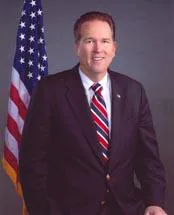
Explore the Full Legislative Wealth Rankings
Discover how other prominent leaders compare across the national proximity index.