


1. Financial Disclosure in the Parliament of Canada
Federal ethics disclosure in Canada is governed under the Conflict of Interest Act for public office holders and the Conflict of Interest Code for Members of the House of Commons, administered by the Office of the Conflict of Interest and Ethics Commissioner (CIEC).
Unlike the United States disclosure framework which mandates broad quantitative dollar ranges (Form OGE-278), the Canadian public registry is qualitative—it documents asset categories, controlling interests, debts, and external engagements to identify conflicts of interest, but statutorily redacts exact cash and portfolio balances. To establish a rigorous statistical distribution, Worthle pairs CIEC asset registrations with actuarial pension capitalisations under the Members of Parliament Retiring Allowances Act (MPRAA), corporate filings from Corporations Canada, and provincial land registry property records.
For the 2024–2026 sessional period, the base statutory indemnity for a Member of Parliament stands at $203,100 CAD, positioning all elected lawmakers in the top 3% of individual Canadian income earners before accounting for outside investment income or ministerial top-ups.
2. Distribution Characteristics: Logarithmic Range and Central Mass
Plotting all 359 cataloged Canadian federal MPs, Cabinet ministers, and provincial premiers on a logarithmic scale reveals a distinct cluster. While valuations span from $285,000 CAD up to $225,000,000 CAD, 237 out of 359 lawmakers (66.0%) are millionaires in Canadian dollar terms, establishing an overall parliamentary median of $1,140,000 CAD:
Lower Distribution Tier
Consisting primarily of recently elected MPs with early-stage pension vesting and residential mortgages in regional ridings.
| MP & Riding | Party | Net Worth |
|---|---|---|
|
Eric Melillo
Kenora–Kiiwetinoong (ON)
|
$285,000 | |
|
Iqwinder Gaheer
Mississauga–Malton (ON)
|
$320,000 | |
|
Alana Hirtle
Cumberland–Colchester (NS)
|
$345,000 | |
|
Jonathan Rowe
Terra Nova–The Peninsulas (NL)
|
$350,000 |
Summit Wealth Tier
Canada's wealthiest political leaders, shaped by large-scale enterprise foundations, commercial shipping, and private finance.
| Politician & Role | Party | Net Worth |
|---|---|---|
|
Paul Martin
21st Prime Minister · Canada Steamship
|
$225.0M | |
|
Doug Ford
Premier of Ontario · Deco Labels
|
$50.0M | |
|
Mark Carney
Former Central Bank Governor · Finance
|
$25.0M | |
|
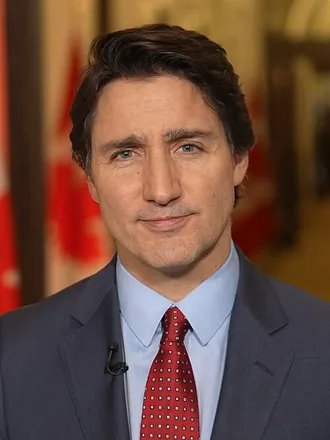
Justin Trudeau
23rd Prime Minister of Canada
|
$10.5M |
Only two sitting politicians (0.6%) report estimated wealth below the Statistics Canada Survey of Financial Security national household median ($329,900 CAD). The overwhelming majority of Canadian lawmakers fall comfortably into the $800k to $2.5M bracket, buoyed by major urban real estate holdings in Ottawa, Toronto, and Vancouver.
3. Chamber & Leadership Dynamics: Commons vs. Executive Leadership
Switching the visualizer to the "Commons vs Executive & Premiers" view highlights a striking bifurcation in Canadian governance:
- House of Commons Backbenchers & MPs (n = 345): The median net worth stands at $1,120,000 CAD, with an arithmetic mean of $1,267,870 CAD. 223 elected MPs (64.6%) hold millionaire status, primarily reflecting decades of accumulated professional home equity and federal MP pension tenure.
- Executive Leaders & Provincial Premiers (n = 14): The executive tier records a median net worth of $5,250,000 CAD—nearly five times the Commons median—with an arithmetic mean of $25,021,429 CAD. Every single executive member (100.0%) holds millionaire status, reflecting high-profile commercial leaders and corporate figures who entered politics at the leadership level.
4. Partisan Financial Breakdown: Liberal, Conservative, and NDP
Evaluating Canada's parliamentary caucuses illustrates that personal wealth across party lines is remarkably uniform:
66.5% millionaires. Arithmetic mean of $2.83M, heavily elevated by figures like Paul Martin ($225M) and Justin Trudeau ($10.5M).
66.0% millionaires. Arithmetic mean of $1.58M, reflecting commercial real estate, agriculture, and private enterprise holdings across Western Canada.
90.9% millionaires. 10 of 11 members hold millionaire status, driven by senior tenure in high-value urban real estate markets like Vancouver and Toronto.
Statistical Summary: Canadian Parliament vs. General Electorate
| Financial Metric | All Parliament (n=359) | Commons MPs (n=345) | Executive (n=14) | Canadian Households StatCan SFS Benchmark |
|---|---|---|---|---|
| Sample Size (n) | 359 | 345 | 14 | 16,200,000 |
| Median Net Worth | $1,140,000 | $1,120,000 | $5,250,000 | $329,900 |
| Mean (Arithmetic Average) | $2,194,192 | $1,267,870 | $25,021,429 | $738,200 |
| 25th Percentile (Q1 Lower Quartile) | $920,000 | $910,000 | $4,125,000 | $64,500 |
| 75th Percentile (Q3 Upper Quartile) | $1,375,000 | $1,350,000 | $14,250,000 | $908,000 |
| Millionaire Share ($1M+ CAD Net Worth) | 66.0% | 64.6% | 100.0% | 24.5% |
| Disparity Ratio (Median vs. StatCan Median) | 3.46x | 3.39x | 15.91x | 1.00x |
5. Methodology: CIEC Disclosures and Statutory Pension Valuation
Because Canadian parliamentary ethics disclosures redact exact dollar figures, estimating politician net worth requires a multi-source asset reconciliation methodology:
- MPRAA Pension Actuarial Capitalisation: Under the Members of Parliament Retiring Allowances Act, MPs vest after six years of service with a generous defined benefit retirement allowance indexed to inflation. Worthle calculates the present actuarial value of accrued pension credits based on individual years of parliamentary tenure.
- Provincial Real Estate Valuations: Primary and secondary real estate holdings registered on public summary statements are cross-referenced with provincial land registries (e.g. MPAC in Ontario, BC Assessment in British Columbia, and municipal evaluation roles in Quebec).
- Commercial Equity & Corporate Directorships: Non-conflicting declared equity in privately held companies (e.g. Paul Martin's Canada Steamship Lines, Doug Ford's Deco Labels & Tags) is valued through audited annual balance sheets and corporate transaction records.
Frequently Asked Questions
What is the median net worth of a Canadian Member of Parliament? ▼
The median net worth of a sitting Canadian Member of Parliament is $1,140,000 CAD. In the House of Commons, the median stands at $1,120,000 CAD, while among Cabinet executive members and provincial premiers, the median reaches $5,250,000 CAD. For comparison, the median Canadian household wealth reported by Statistics Canada (SFS) is $329,900 CAD.
How many Canadian MPs are millionaires? ▼
237 out of 359 cataloged Canadian politicians (66.0%) hold an estimated personal net worth of $1,000,000 CAD or greater. In the Liberal caucus, 66.5% are millionaires, while in the Conservative caucus, 66.0% are millionaires.
Who is the wealthiest political figure in Canada in 2026? ▼
Former Prime Minister Paul Martin holds the highest personal valuation at approximately $225,000,000 CAD from his ownership of Canada Steamship Lines. Among sitting provincial premiers, Ontario Premier Doug Ford discloses approximately $50,000,000 CAD, while Prime Minister Justin Trudeau discloses approximately $10,500,000 CAD.
What is the annual base salary of an elected Canadian MP? ▼
The statutory base sessional allowance for a Canadian Member of Parliament is set at $203,100 CAD per annum, adjusted annually under the Parliament of Canada Act.
Can You Deduce Canadian Politician Net Worths?
Now that you have explored the distribution, put your intuition to the test. Every 24 hours, Worthle selects a new public figure. Deduce their net worth in 5 attempts, explore their asset disclosures, and collect their trading card.